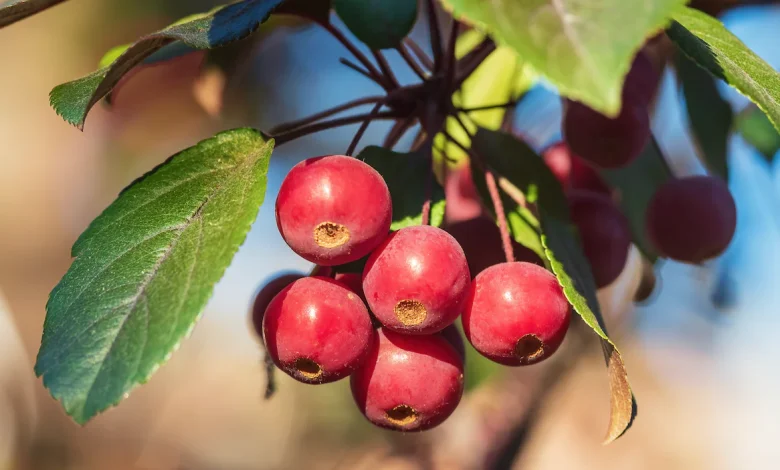
Unlike dessert apples grown primarily for eating, crab apples are valued for their ornamental beauty and ecological benefits. Their spring blossom is often among the earliest nectar sources available to pollinating insects. Later in the year, their small fruits feed birds and can also be harvested for jellies, preserves, or decorative autumn displays.
Garden designers frequently recommend crab apples because they combine practical advantages with aesthetic appeal. Most varieties are compact enough for urban gardens and respond well to pruning if shaping is required. Many modern selections also show improved resistance to common apple diseases such as scab and mildew.
For gardeners researching crab apple trees for sale, it is worth understanding that different cultivars offer very different characteristics. Some varieties produce heavy fruit crops, others focus on exceptional blossom displays, and some are chosen mainly for striking foliage or autumn colour.
The fruit trees specialists at ChrisBowers explain that gardeners should choose varieties based not only on blossom colour but also on fruit persistence and tree habit. Their nursery notes that many gardeners look specifically for varieties that retain fruit well into winter, providing extended visual interest and valuable food for birds. Those exploring reliable crab apple trees for sale can review specialist nursery selections at ChrisBowers.
Understanding the strengths of different varieties helps gardeners choose trees that perform well in specific settings, whether that means a wildlife-friendly garden, a small courtyard space, or a traditional orchard border.
What Makes a Good Crab Apple for UK Conditions
Britain’s climate is particularly suitable for crab apples. The moderate rainfall and cool winters help maintain healthy growth, while relatively mild summers allow fruit to develop without excessive heat stress. However, not every variety performs equally well in all parts of the country.
When selecting a crab apple tree, several characteristics should be considered. Tree size is one of the most important. Some varieties eventually reach 7–8 metres, while others remain compact enough for smaller gardens. The rootstock used by nurseries also influences final height and spread, making it worthwhile to check specifications carefully.
Blossom display is another major factor. Crab apples are prized for their spring flowers, which range from pure white to deep pink and crimson. In many gardens they flower at roughly the same time as ornamental cherries, but their blossom often lasts longer and is more resilient in unpredictable spring weather.
Fruit characteristics vary significantly between cultivars. Some produce tiny marble-sized fruits that persist on the branches for months, while others develop slightly larger fruits suitable for culinary uses such as crab apple jelly. The colour spectrum ranges from bright red and orange to yellow and deep burgundy.
Disease resistance is increasingly important. British gardeners are well aware of issues such as apple scab, canker, and powdery mildew. Modern breeding programmes have produced several crab apple cultivars with excellent natural resistance, reducing the need for chemical treatments and improving reliability in wetter regions.
Another consideration is wildlife value. Many birds depend on late-season fruits, particularly during colder months when other food sources are scarce. Varieties with persistent fruit clusters can remain attractive well into winter, offering both ornamental interest and ecological benefits.
Gardeners also appreciate crab apples for their compatibility with edible apple trees. Many crab apple varieties serve as excellent pollinators for orchard apples, improving fruit set in nearby trees. For anyone managing a small orchard or mixed fruit garden, planting a crab apple nearby can significantly enhance pollination success.
These characteristics make crab apples not only decorative but also practical additions to a wide range of garden settings across the UK.
Crab Apple One: Malus ‘Golden Hornet’
Malus ‘Golden Hornet’ has long been recognised as one of the most dependable crab apples for British gardens. It combines attractive spring blossom with heavy crops of bright yellow fruits that persist well into winter. The tree itself develops a rounded crown and typically reaches around five metres in height, making it manageable in most medium-sized gardens.
In spring, ‘Golden Hornet’ produces clusters of white flowers tinged with soft pink in bud. These blossoms are highly attractive to bees and other pollinators, often appearing in abundance across the branches. The flowering period usually occurs in mid to late spring, depending on regional climate.
The real standout feature appears later in the year. By autumn the tree is covered with golden-yellow fruits that resemble miniature apples. These fruits hang in dense clusters and often remain on the tree long after the leaves have fallen, creating a striking winter display.
Because the fruits are slightly larger than many crab apples, they are suitable for culinary uses. Gardeners often harvest them to make traditional crab apple jelly, a preserve valued for its sharp flavour and clear amber colour. The high natural pectin content makes them particularly effective for jelly-making.
‘Golden Hornet’ also serves as an excellent pollinator for many dessert and cooking apple varieties. For gardeners growing apples in small orchards or garden borders, planting this crab apple nearby can improve pollination and fruit yields.
The tree performs well in a range of soils provided drainage is reasonable. It prefers full sun but tolerates partial shade, although fruiting may be slightly reduced in heavily shaded positions. Once established, it requires minimal maintenance beyond occasional pruning to remove congested branches.
Because of its balanced combination of blossom, fruit, and reliability, ‘Golden Hornet’ is frequently recommended by British nurseries as one of the safest choices for gardeners planting their first crab apple tree.
Crab Apple Two: Malus ‘Evereste’
Malus ‘Evereste’ is widely regarded as one of the best modern crab apple varieties. Developed in France but perfectly suited to UK conditions, it combines ornamental beauty with exceptional disease resistance.
The tree forms an upright, elegant shape that gradually develops into a broad crown as it matures. This structure makes it particularly suitable for lawns, front gardens, or as a focal point in mixed planting schemes. Mature height typically reaches five to six metres.
Spring blossom is a major attraction. Buds appear deep pink before opening into white flowers with a delicate blush. The contrast between pink buds and white petals creates a striking display that often lasts several weeks.
By autumn the tree is covered with orange-red fruits that remain on the branches well into winter. These fruits are smaller than those of ‘Golden Hornet’, but they appear in large numbers and provide outstanding seasonal colour. Birds often feed on them gradually throughout the colder months.
One of the key strengths of ‘Evereste’ is its natural resistance to common apple diseases. It shows strong tolerance to scab and mildew, two problems that frequently affect ornamental apples in damp climates. This resilience makes it particularly suitable for gardeners seeking low-maintenance trees.
The foliage also contributes to seasonal interest. Leaves emerge fresh green in spring before deepening during summer and turning golden-yellow in autumn. Combined with the bright fruit clusters, the autumn display can be especially striking.
Because of its reliability and balanced ornamental features, ‘Evereste’ has become a favourite choice for landscape planting as well as private gardens.
Crab Apple Three: Malus ‘Red Sentinel’
Malus ‘Red Sentinel’ is perhaps one of the most recognisable crab apple varieties planted across Britain. Its popularity stems largely from its vivid fruit display, which often persists deep into winter.
The tree grows with a slightly upright habit when young, gradually spreading as it matures. In most garden situations it reaches around four to five metres in height. This moderate size allows it to fit comfortably into many residential gardens without overwhelming surrounding planting.
Spring brings a mass of white blossom that opens from pale pink buds. The flowers appear in generous clusters and are highly attractive to pollinating insects. When planted near edible apple varieties, ‘Red Sentinel’ also serves as an effective pollinator.
However, the defining feature of this cultivar is its fruit. By autumn the tree produces dense clusters of glossy red crab apples that resemble polished berries. These fruits are particularly persistent, often remaining on the tree well after the leaves have fallen.
During late autumn and winter, the bright red fruits stand out against bare branches, creating a striking visual effect. This quality makes ‘Red Sentinel’ especially popular in ornamental planting schemes where winter interest is important.
The fruits themselves are generally too sharp for eating raw but can be used in preserves and jellies. Their strong colour can also add visual interest when mixed with other fruits in homemade preserves.
‘Red Sentinel’ performs best in full sun and well-drained soil, although it tolerates typical garden conditions throughout much of the UK. Once established, it requires little maintenance beyond occasional pruning to maintain structure.
For gardeners seeking a reliable ornamental tree with strong winter appeal, this variety remains one of the most widely recommended crab apples available.
Crab Apple Four: Malus ‘John Downie’
Malus ‘John Downie’ is a traditional crab apple that has been grown in British gardens for many decades. Unlike some purely ornamental varieties, it is valued both for decorative qualities and for culinary uses.
The tree produces large white blossoms in spring, opening from soft pink buds. These flowers appear in generous clusters and attract bees in significant numbers. The display can be particularly impressive when the tree is planted in open positions where the crown develops fully.
As the season progresses, elongated orange-red fruits begin to form. These fruits are noticeably larger than those produced by many other crab apples and resemble miniature cooking apples. Because of their size and flavour, they are widely used for jelly, chutneys, and preserves.
Gardeners interested in traditional home preserving often choose ‘John Downie’ specifically for this reason. The fruits combine high pectin levels with a pleasantly sharp flavour that works well in sweet or savoury recipes.
The tree itself can grow slightly larger than some ornamental crab apples, eventually reaching six metres or more depending on rootstock and conditions. However, it remains manageable in most gardens and responds well to pruning if size control is required.
Autumn colour provides an additional seasonal feature. The leaves typically turn shades of yellow before falling, leaving the colourful fruits visible on the branches. This combination creates an attractive transition between autumn and winter.
‘John Downie’ thrives in typical British garden soils and performs particularly well in sunny positions. It is also known for its good tolerance of urban conditions, making it suitable for gardens in towns and cities.
Because it combines ornamental beauty with useful fruit production, this variety remains a favourite among gardeners who appreciate both practical and decorative qualities in their planting choices.
Crab Apple Five: Malus ‘Butterball’
Malus ‘Butterball’ is a slightly less widely known crab apple but one that deserves greater attention from gardeners seeking something distinctive. Its name refers to the soft yellow fruits that develop later in the year, giving the tree a gentle and unusual appearance.
In spring the tree produces delicate white blossoms that emerge from pink buds. While the flowers themselves are relatively subtle compared with some dramatic pink varieties, they create a soft and elegant display across the canopy.
The foliage is another appealing feature. Leaves emerge fresh green in spring before deepening in colour during summer. By autumn they often develop golden tones that complement the pale yellow fruits.
‘Butterball’ produces small round fruits that range from pale yellow to creamy gold. These fruits often remain on the tree into early winter, creating a softer colour palette than the bright reds typically associated with crab apples.
The fruits are edible when cooked and can be used in preserves or jellies. Their lighter colour can produce clear, golden preserves that differ visually from those made using darker varieties.
In terms of growth habit, ‘Butterball’ forms a rounded crown and usually reaches around four to five metres in height. This makes it suitable for a wide range of garden settings, from lawns to mixed ornamental borders.
The variety also performs reliably in typical British conditions. It prefers sunny positions but tolerates partial shade and adapts well to different soil types provided drainage is adequate.
For gardeners looking to introduce a softer colour scheme into their planting while still benefiting from the seasonal interest of crab apples, ‘Butterball’ offers a distinctive and attractive option.
Choosing the Right Crab Apple for Your Garden
Selecting the right crab apple tree depends largely on the role it will play in the garden. Some gardeners prioritise blossom colour, while others focus on fruit display or wildlife value.
For striking winter colour, varieties such as ‘Red Sentinel’ stand out due to their long-lasting fruit clusters. If culinary use is important, ‘John Downie’ offers larger fruits well suited to traditional preserving.
Garden size also matters. Compact varieties work best in smaller urban gardens, while larger trees may suit lawns or open orchard areas. Understanding the mature height and spread of each cultivar helps ensure the tree fits comfortably within the available space.
Soil conditions should also be considered. Crab apples generally tolerate a wide range of soils but perform best in well-drained ground with reasonable fertility. Adding organic matter during planting can improve establishment and long-term growth.
Positioning is another key factor. Most crab apples produce the best blossom and fruit when planted in full sun. Sheltered locations can also help protect early blossoms from strong winds or late frosts.
With thoughtful selection, crab apple trees can become long-lasting features in British gardens. Their seasonal changes provide interest throughout the year, from spring blossom and summer foliage to autumn colour and winter fruit.
For gardeners seeking reliable ornamental trees with strong ecological benefits, crab apples remain among the most rewarding choices available. Their combination of beauty, wildlife value, and practical usefulness ensures they continue to play an important role in gardens across the UK.